12 Kitchen Tips for VIPs

1.  Good lighting.  Everything starts with good lighting.  Use room lighting, spot lighting, and even motion sensor lighting in dark areas, like inside cabinets.

Cabinet Light
Pictured: Motion sensor LED light. The light comes on when the door is opened and stays lit for about 60 seconds, longer if more motion is detected. Rechargeable, and requires charging about once a month with average use.

2.  Food Prep Tray.  Place cutting board, utensils, and foods on a food prep tray, a tray with a lip around it. You will spend less time searching the floor for things that bounced, rolled, or fell.

Prep Tray
Pictured: Orange plastic tray with lip around edges sits on countertop. On the tray are knife and fork, spices including salt, garlic, and paprika, 3 whole eggs and a stainless steel mixing bowl.

3.  Stainless steel drinking cups.  Instead of glasses that are easily tipped over and too often shatter, use stainless steel drinking cups.  They are just a little more expensive up front but last and last without needing replacement, so quite cost effective in the long run.  As an added bonus, they keep cold drinks naturally colder.

Stainless Steel Cups
Pictured: 4 stainless steel drinking cups – 2 12-ounce cups and 2 8-ounce cups.

4.  Two-sided cutting board.  A cutting board with a black side and a white side provides contrast. Use the side that has the most contrast with the food you are cutting or chopping or dicing or slicing.

Cutting Board
Pictured: An admittedly difficult-to-see 2-sided cutting board. The white side is shown. The black side is face down.

5.  Sauce pans.  Sauce pans contain food and spatter better than fry pans. The end result will be the same, but less food will slip, slide, or spatter over the sides.

Sauce Pan Cooking
Pictured: Sauce pan on stovetop containing a large slotted spoon for stirring, and the ingredients for “Thunder & Lightning.”

6.  Oven-cooked bacon.  Lay strips of bacon in a single layer on the bottom of a roasting pan.  Place in a 400-degree oven for 22 minutes.  Perfect bacon every time – and without the hot grease spatter.  Google will suggest you use a cookie sheet. No! That hot grease will splash about when you remove the tray from the oven. Use a roasting pan. It is deeper and will contain the grease better. Trust me on this one!

Bacon - Oven
Pictured: Cooked bacon on baking sheet fresh out of the oven.

7.  Mandoline.  Keep your fingers safe from sharp blades by slicing with a mandoline. Not only will your fingers and fingernails stay protected, but you will end up with uniform slices of fruits and vegetables, and more.

Mandoline
Pictured: A mandoline for safe and uniform slicing and its food holder. The food holder has a large knob for holding the food firmly in place for slicing.

8.  Spice jar labels.  Index cards (cut to fit) with spice names written with bold markers can be wrapped around spice jars and secured with a rubber band. See blog post “Spice Things Up” for details.

3 Spice Jars labeled
Pictured: 3 spice jars boldly labeled for curry, cinnamon, and cumin. Rubber bands hold the labels in place.

9.  Bump dots.  Place bump dots on microwave and oven and other appliance buttons to easily identify the location of buttons you use frequently. This ensures that you will consistently press the desired button, and you will also do so in less time.  Bump dots are available in many sizes, shapes, and colors.  If you know any people who are blind or visually impaired, odds are they have bump dots to spare.  You only need a few.

Bump Dots
Pictured: Assorted bump dots including flat felt dots, round cork dots, raised round orange dots, raised black round and square dots, and clear round raised dots. Many other sizes, shapes and colors are also available.

10.  Spice ladles.  Spice ladles can be dipped easily into spice jars and other condiments for removal of just the right amount.  Avoid spills and waste.  See blog post “4-Inch Ladles” for details.

Spice Ladles comparison
Pictured: A jar of paprika with 3 spice ladles, a soup ladle, and a teaspoon.

11.  Double spatula.  A double spatula makes turning pancakes, french toast, hamburgers, and more, an easy task.

IMG_0203
Pictured: A double spatula – 2 spatulas with a nonstick finish that are connected in order to work together as tongs or flippers.

12.  Silicone trivets.  Multi-purpose silicone trivets, typically 8-inches in diameter, can be used as hot pads, potholders, coasters, and more.  They can easily be trimmed, if desired.  Because of their nonslip properties, I find them most beneficial as nonslip pads for mixing bowls, hot pots, serving bowls, cups, etc.


Silicone Trivets
Pictured: An 8-inch diameter silicon trivet that has been trimmed to 5 inches. The cutaway ring can be used under mixing bowls, etc., to prevent slippage.

Bonus

Your personal assistant – Alexa, Cortana, Siri, etc. Ask your personal assistant to set a timer for you, read a recipe, or suggest substitute ingredients.

Personal Assistant
Pictured: An iPhone. Siri ha set the timer and it is displayed.

_________________________________________

Links of products and information related to the above blog post.  Note that the links showing items for purchase are for information only and are not specifically endorsed.


Talk to me.  I would love to hear from you!

     –  Renee


← Back

Thank you for your response. ✨

Warning
Warning
Warning

Warning.

T


Novel Characters

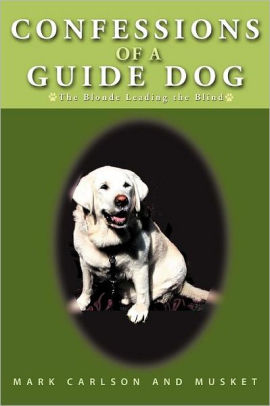
Confessions of a Guide Dog: The Blonde Leading the Blind
       Pictured: Book cover – Confessions of a Guide Dog

 Are you looking for a good book?

The following list of novels features characters who are blind or visually impaired.  All of these books stand out as great reads and are recommended.  This list is a work in progress.  Additional books featuring characters who are blind or visually impaired will added to this list as they become known.  This page can be accessed at any time under the BOOKS tab at the top of this and every page on this blog.

Click on a hyperlink if you are interested in reading my review.

  1. All the Light We cannot See by Anthony Doerr

  2. Blind Curve by Annie Solomon

  3. Blindness by Jose Saramago

  4. Confessions of a Guide Dog by Mark Carlson and Musket

  5. Girl, Stolen by April Henry – young adult

  6. Seeing by Jose Saramago (sequel to Blindness)

  7. The Fault in Our Stars by John Green

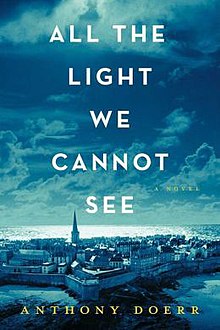
Image result for all the light we cannot see
Pictured:  Book cover      –  All the Light We Cannot See

A


10 Knit-Crochet Tips for VIPs

Men do it, women do it, even dedicated blind do it. So grab your hooks or your needles and let’s look at some tips to make yarn crafts more accessible, organized, and fun.

Crochet Creations
Pictured: Crocheted items include hotpad, hat with pompom, scarf, and towel holders.

Tip #1
Good lighting. A task light can be the best tool of all.

img_0288-1
Pictured: A desk lamp with soft-light fluorescent bulb is designed for task lighting. The head  can be positioned and directed as needed. This lamp is directed on a cone of red cotton yarn and a crochet hook with beginning slip knot.

Tip #2
Use chunky yarn and larger hooks and needles. Larger gauge materials are easier to work with. With some experience, common 4-ply yarn can be doubled and even tripled for some projects.

img_0279
Pictured: Two skeins of red yarn. On the left is worsted weight and on the right is super chunky. The super chunky yarn is much thicker and requires a much larger crochet hook, as shown.

Tip #3
Use large print or audio pattern instructions. (Duh!)

img_0287
Pictured: YouTube icon. YouTube has many crochet tutorials and patterns in audio format.

Tip #4
Consider loom knitting. Loom knitting can be easier to work with, especially for newbies, with fewer dropped stitches.

img_0275
Pictured: A pink knitting loom with a pink knitted hat in progress.

Tip #5
Use paper clips as stitch markers. The colorful vinyl-coated paper clips work well with little or no snagging. The paper clips are also great as a place holder at the end of your knit/crochet session. Slip a paper clip through the last stitch, and even the cat won’t be able to unravel your work overnight while you sleep.

Paper Clips
Pictured: Six paper clips, all vinyl coated, assorted colors.

Tip #6
Use plastic blunt-tipped needles for weaving in all those ends at project’s conclusion.

Plastic Needles
Pictured: Three blunt-tipped plastic sewing needles with large eyes for working with yarn.

Tip #7
Use a needle threader. Some needle threaders are better than others. The needle threader pictured below is my favorite. I have been using just one of them for years now. I have not needed to use any of the backup threaders.

Needle Threader
Pictured: Three identical flat metal needle threaders. Each has a small hook on one end for threading embroidery threads and a larger hook at the opposite end for threading yarns of various types.

Tip #8
Keep a magnet in a small sewing box with your needles. This will save you from crawling on your hands and knees hunting for that dropped needle or pin. A magnet holds onto my needle threaders too.

Magnetic Needle Tin
Pictured: A small metal box with two magnets inside, one on the inside lid and one on the inside bottom.  Paper clips and needle threaders are held in place by the top magnet, and sewing and embroidery needles are held in place by the bottom magnet.

Tip #9
Store project – all yarn, hooks, instructions, etc. – in a plastic bag or box. Keep a written or voice recorded record of yarn type and color, hook/needle size, and any special instructions. You might add the date in case it becomes a time capsule.

Project Bag
Pictured: A clear plastic zippered bag with crochet project, working yarn, crochet hook and written instructions inside. The instructions card says: Hat, Caron Simply Soft white, hook H, scrap colors #4.

Tip #10
Keep your working yarn in a container to keep the yarn balls from rolling around and onto the floor. A colander works well for multiple balls of different colors. A coffee can can be repurposed to fit the need, as can a shoe box or almost any other container.

Colander
Pictured: A colander with two skeins of yarn (one pink, one white) with yarn ends poking through colander holes from inside to outside. A crochet hook is seen with white yarn ready to be worked.

Bonus Tip
Replace your sewing straight pins with sewing clips. When you drop one without even knowing it, sewing clips are so much less painful to step on!

Sewing Clips
Pictured: Four sewing clips of various colors. Each clip is pressed open and clamps onto the fabric much like a miniature clothespin.

__________________________

The following products are presented for information only. They are not specifically endorsed.


Where Am I

Braille Book 2
Pictured: A braille book with small binder clip marking the page at about 1/3 of the way down the page.
Print Book
A print book with a small binder clip marking the right-hand page about 2/3 of the way down the page.


Do you ever get lost?  In a book, I mean.  Do you read a bit and take a break and go back later to continue?  Where did you leave off?  How do you know where to pick up your reading?  How long does it take to find your place?  Where is that word or phrase you wanted to look at again, but later?

When I took my first braille course at Hadley (Braille Literacy 1, uncontracted braille), I was given sheets of sticky felt circles to use as place holders, – bookmarks, if you will.  I found them to be somewhat of an annoyance.   They seemed to stick to my fingers more often than the page.   They were not removable and so added bulk to the book. And because I have some vision, I found them to be distracting on the page.

It was not long before I stopped using those sticky dots and started using Post-It Notes.  Maybe I should have tried the name brand and not the generic, because they seemed to fall off the page all too often.

And then I found my problem-solver  – binder clips!  I place a small binder clip at the edge of the page at the spot where I left off.   The binder clip stays put.  It is easy to relocate, and I always know exactly where I left off – instantly.

Binder Clips
Pictured: Five binder clips in assorted colors and positions. The top 2 are each about 1-1/4 inch wide and the bottom three are each about 3/4 inch wide.

I bet sighted people would benefit from these handy-dandies too.

What do you use to help you find your place in a book?


_______________________________


It’s About Time

Three wristwatches areshown: a talking watch, a iPod Nano no longer being sold, and a new smart watch. Each watch faces appears different. The three watches display different times.
Pictured: Three watches are shown. Top: a smart watch, unknown manufacturer; Middle: An iPod Nano with elastic band crafted as wrist band; and bottom: a man’s talking watch with stretch metal band by Tel Time.

Years ago, my mother bought a cuckoo clock for her home.  She hung it on the wall in her living room and every hour the cuckoo called out the time. One loud cuckoo at 1 o’clock, 3 loud cuckoos at 3 o’clock, and so on.  And if that were not enough, it bellowed another cuckoo to mark every quarter hour, as well.  At 4 A.M. everyone knew the time because you could not sleep through it.

Well, I am not a fan of clocks that announce the time.  I think a cuckoo clock is a novelty, and as such, it should be heard once, maybe twice, in a lifetime and that is enough.  I feel the same way about talking watches.  Remember the crowing rooster watches marketed for the blind?

Talking watches got smarter.  Most no longer crow but actually announce the time.  “The time is 5:17,” the robotic voice declares. I do not want everyone in the movie theater to know I am getting impatient for the movie to end. I do not want a busload of people to know I have just checked the time.  I do not even want that time announcement to talk over the sound of the TV I am watching.  I do not like talking, crowing, or cuckooing clocks!

I want a watch I can wear on my wrist that tells me the time when I look at it.  I like the clock face to be big with bold hands and high contrast.  I do not need to see the numbers – I know where they are.  Just give me one indicator at the 12 o’clock position and everything else is relative; no clutter needed!

I have an old iPod Nano that I used for a timepiece for many years.  It came with a bunch of clock faces for me to choose from.  It had a pedometer and a stopwatch. It even had a radio if I wanted to connect earbuds or headphones.  That little thing would even read a 500-page book to me, if I so chose.  I hung it on a chain around my neck for a long time and later crafted my own elastic band for it and wore it as a wristwatch.  I loved my iPod Nano – until the battery recently lost its oomph.

So I decided to try out a smart watch.  They can be quite pricey, so I started at the low end, the very low end.  I bought one from amazon for $22.

The smart watch does a lot.  It has one clock face (no choice), and it has a pedometer.  I can add a SIM card and pretend to be Dick Tracy talking through my wrist for phone calls and texts.  It accepts a memory card so I can snap pictures from my wrist. It even sounds an alarm if the watch thinks  I have been sitting too long and need to get up and move about.  It does even more, more than I care to give much thought to.  Notably, however, the band is peculiar, to put it nicely.  It takes quite a bit of manipulation and gymnastics to get it around my wrist and locked in place, although I do not feel that it is ever securely fitted in place.  Removing it is a dance of its own.  The watch is fairly heavy for my small wrist and so when at rest, my wrist is turned to the side.

For $22, this smart watch is truly amazing.  Change the band and add a few faces to choose from and I am in! Until then, it is time to keep looking.

Can We Talk?

Do you see what I see?  Can you see what you can’t see?  What is it, and how do you know?

Assistive devices for vision impairment can be very helpful, and very expensive.  CCTVs, braille writers, magnifiers, and audiobook players cost hundreds, even thousands of dollars, to name just a few things that could help blind and visually impaired people.  Even audiobooks can be beyond our budget.  Too often, even tools that can help us with our daily activities and special needs are not even made available for us to try, or even know about.  And then, can we afford them?  We must rely on word of mouth, and even then the results can be disappointing.  It is not like I see what you see, or that you see what someone else sees.  With vision impairment, we all see (or don’t see) the same things differently.

Talking about different devices can often lead to success.  Even better, there are so many common household items and stationery supplies, and even things we never gave much thought to that provide so much benefit.  Sometimes we just have to think outside the box.

For example, did you know you can cook perfect bacon in the oven instead of a fry pan and avoid all the hot oil spatter?  Did you know a child’s whiteboard can be the perfect tool for your notes and reminders?  Did you know you can easily connect your tablet to your computer screen or TV so you can benefit from greatly enlarged print and images?  Did you know there is an online group that gives away used audiobooks and braille books, magnifiers, and more?

We have a lot to talk about.  So let’s explore together.

Thanks for joining me on this journey.


Talk to me.  I would love to hear from you!

← Back

Thank you for your response. ✨

Warning
Warning
Warning

Warning.